Well, here’s the thing: content marketing is not just about posting random content on every platform available!
You’ve probably realized that by now, especially if you’re researching end-to-end content marketing.
In this blog, I’ll break down all the essentials that go into the “end-to-end” process. Whether your B2B brand is in manufacturing, MarTech, a service-based business, or even a family-run business just starting to go digital, this will help.
By the end of it, you’ll know exactly what you need to implement and the right order to do it in.
What Does “End-to-End” Content Marketing Mean?
End-to-End Content Marketing entails: Strategy + Creation + Distribution + Conversion + Measurement.
So, yes, it’s not just about posting a few pictures with captions or publishing an AI-generated video.
It requires:
- Market understanding
- Content strategy
- Content production
- Distribution and amplification
- Tracking and optimization
And for each of these five pillars, you need an executor. It’s the work of an entire team.
So, if you assumed one marketing professional with 3-4 years of experience could handle all of this alone, it won’t work!
If you’re on a limited budget and simply want to experiment with content marketing, your best option is to hire a fractional content marketer for a mutually agreed period.
These fractional content marketers (like me!) manage your content marketing with the support of specialist teams.
Based on your exact requirements, they onboard experts on demand — whether freelancers or part-time marketing professionals.
Of course, you’ll still need to work in tandem with them to make the strategy actually work.
But if you’re a hands-on business owner or already have a capable internal team, here’s the framework I usually follow for small B2B businesses in India.
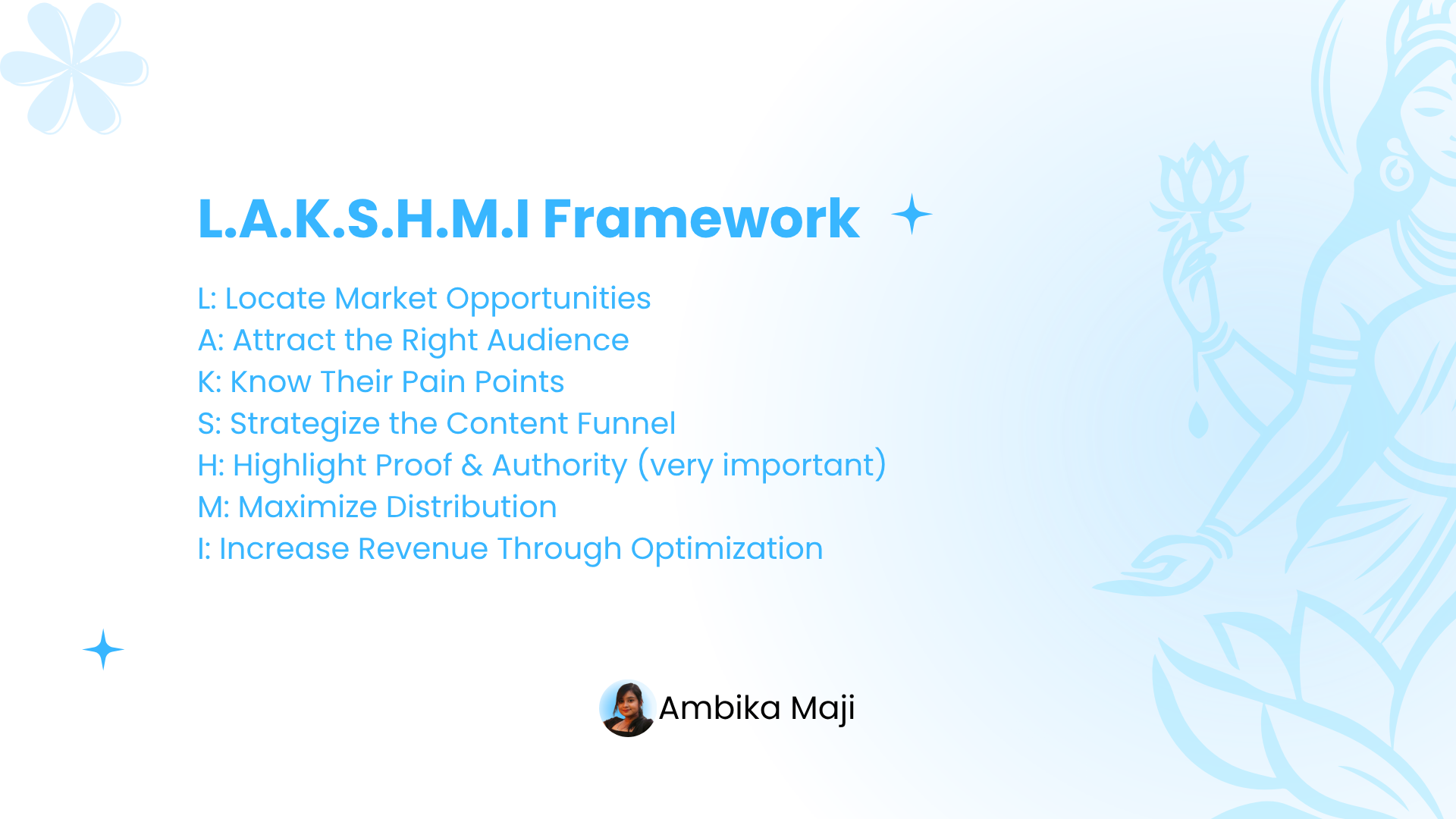
I call it the L.A.K.S.H.M.I Framework.
Here’s what it encompasses:
L: Locate Market Opportunities
A: Attract the Right Audience
K: Know Their Pain Points
S: Strategize the Content Funnel
H: Highlight Proof & Authority (very important)
M: Maximize Distribution
I: Increase Revenue Through Optimization
Now, let me break it down for you.
Step 1: Locate Market Opportunities
Ever wondered how big brands like Zomato, Swiggy, and Blinkit come up with marketing campaigns that stick in your mind?
It all comes down to extensive market research, something I’ve noticed many small B2B businesses tend to overlook.
The most common approach?
Do what the big players in the industry are doing.
Sounds safe, right?
But here’s the catch: when you follow that route, you end up competing in areas where they already have years of experience, larger budgets, and stronger brand recall.
Instead of copying what’s already working for them, the smarter move is to identify market gaps and overlooked opportunities.
So, here’s what you actually need to do:
Industry Research:
Read as many recent and relevant articles, reports, and updates about your industry as you can get your hands on.
You need to stay on top of trends.
And this is not a one-time activity, by the way, it’s an ongoing process.
When you consistently follow industry updates, you’ll understand what the market is focusing on and which topics are likely to work.
Not just for marketing, but even for improving your product or service.
For example, if you’re in the semiconductor industry, you’d want to follow annual reports from companies like McKinsey & Company or Deloitte, updates from the Semiconductor Industry Association, and even policy announcements from the Government of India related to semiconductors.
Subscribe to industry-specific newsletters, magazines, and email updates.
Competitor Selection:
When it comes to competitor selection for your small business, stick to 5-6 competitors that are the closest to what you do or sell.
Trying to analyze too many businesses at once will only overwhelm you and dilute your focus.
Here’s how you should select them:
Start by listing down all the competitors or similar companies you can find in your niche.
Then, score them based on factors like product similarity, target audience, pricing, positioning, content quality, market presence, or any other criteria relevant to your business.
Use the table below to shortlist the ones that are most aligned with your business.
| Criteria | What to Look For | Why It Matters | Score (1-5) |
|---|---|---|---|
| Industry Relevance | Same or closely related industry | Ensures audience overlap | |
| Target Audience Match | Similar ICP (company size, role, geography) | Makes content comparison meaningful | |
| Business Model Similarity | Service vs product vs SaaS vs manufacturing | Funnel strategy depends on the model | |
| Digital Activity Level | Active blog, LinkedIn, SEO presence | No point auditing inactive brands | |
| Content Depth | Educational blogs, case studies, resources | Indicates strategic maturity | |
| SEO Visibility | Ranking for relevant keywords | Reveals keyword opportunities | |
| Geographic Focus | India-focused or global? | Regional relevance matters | |
| Funnel Sophistication | Lead magnets, email capture, and landing pages | Shows conversion strategy | |
| Authority Signals | Testimonials, certifications, partnerships | Shows trust-building methods | |
| Similar Company Size | SME vs enterprise giant | Avoid unrealistic comparisons |
Scoring method:
- Score each competitor from 1-5 in each category
- Select the top 3-5 highest scoring competitors
- Avoid competitors that are:
- Too large (enterprise giants)
- Too inactive
- Targeting a completely different audience
When you’ve selected a few, then organize the competitors in the following order:
| Type | Example Description | Why Include |
|---|---|---|
| Direct | Same service, same geography | Realistic benchmark |
| Indirect | Same audience, different solution | Content inspiration |
| Aspirational | Larger but structured | Strategic insight |
| Content-First Brand | Strong content engine | Learn distribution & authority |
This need not be this elaborate, but it’ll give an idea of how to organize.
Never benchmark against competitors 50x your size and audit competitors who're 1-3 steps ahead of you, not 10.
Competitor Content Audit:
Once you have your list of competitors ready, it’s time to start analyzing their content strategically.
Every competitor will have a different brand personality, so you don’t need to follow everything they do.
Instead, focus on understanding the vibe of their audience: what people are engaging with, commenting on, sharing, or responding to.
This part takes time.
I usually do this using a Google Sheet, and honestly, it’s a fairly laborious task. So, don’t rush it.
For me, it generally takes around 6-8 hours or even 2 days (depending on the number of competitors) to map out everything they’re doing and make sense of it based on what my brand or my client’s brand wants to communicate.
Based on your business, you’ll need to decide which type of content works best for you. The type of content you put out will largely depend on your target audience.
I’ve added a sample content audit below. You can use it as a starting point and customize the tabs based on your requirements.
Keyword and Query Research:
Keyword research tells you where the opportunity lies. Query research tells you how people are actually searching for it.
Today, you need both.
Instead of chasing broad, high-volume keywords, focus on long-tail, intent-based keywords and real user queries that directly relate to your brand, product, or service.
If possible, consult an SEO/GEO professional, even as a one-time engagement, to properly structure your keyword clusters and query mapping.
If that’s not feasible, you’ll have to do the legwork yourself.
Most advanced tools are paid, so in the beginning, you may need to rely on free versions or trial periods.
I generally use Ubersuggest by Neil Patel, but you can explore other tools once you’ve validated ROI.
At the start, your understanding of the niche matters more than expensive tool subscriptions.
Now Comes GEO: Generative Engine Optimization
If you want your brand to appear in AI overviews and generative search platforms, query research becomes even more important.
Your content must be easy for AI systems to extract, verify, understand, and cite.
Here’s what currently supports GEO:
- Ensure contextual brand mentions across authoritative platforms, not forced backlinks.
- Invest in online PR and industry publications.
- Standardize your company description, positioning, and messaging everywhere.
- Publish original research, unique insights, or updated statistics in your niche.
- Identify 3-5 core brand facts (pricing, features, USPs, positioning) and keep them consistent across platforms.
- Structure content in extraction-friendly formats: FAQs, comparison tables, bullet points, answer blocks, and clear subheadings.
- Implement structured data markup wherever possible.
- Ensure AI crawlers can access your website.
- Secure leadership appearances on niche podcasts, webinars, or expert panels.
- Focus on genuine reviews and third-party validation on platforms like Reddit, Quora, GitHub, and G2.
Most of this may sound like foundational SEO and in many ways, it is.
The difference lies in intent.
Earlier, we optimized for rankings. Today, we optimize to become AI-cited sources.
Authority, clarity, consistency, and verifiable mentions are what help both search engines and generative AI systems recognize your brand as trustworthy and credible.
Check how GenAIs are evaluating your brand using Hubspots' AI search grader. (Consider this, only if your brand has existed for some time now)
Step 2: Attract the Right Audience
To attract the right audience, you first need to know who exactly your “right” audience is.
I’ve seen most small B2B companies struggle with this.
Often, out of desperation, they try to sell to anyone willing to pay. (I’ve been there too 🥲 )
But that usually doesn’t work out in the long run.
You may end up attracting people for whom your product or service was never actually built.
The result? Dissatisfaction, poor-fit clients, and bad reviews.
On top of that, you’ll likely receive a flood of irrelevant queries, calls, and leads that go nowhere.
I saw this happen with one of my solopreneur acquaintances.
In the beginning, her positioning wasn’t very well thought out. She knew the operational side of her business extremely well but was open to working with almost anyone.
She was posting consistently on LinkedIn, but none of the content was truly targeted. She was getting almost 2-3 “lead” calls per month and most of them were irrelevant.
That’s when we got on a call, and I started asking her questions, almost like an interview, to identify her strongest services.
From there, we mapped out the industries she already had experience in and, more importantly, the ones she genuinely enjoyed working with.
That exercise helped narrow down her ideal target market.
In the end, I documented everything and shared a structured roadmap with her.
That clarity changed the way she positioned herself.
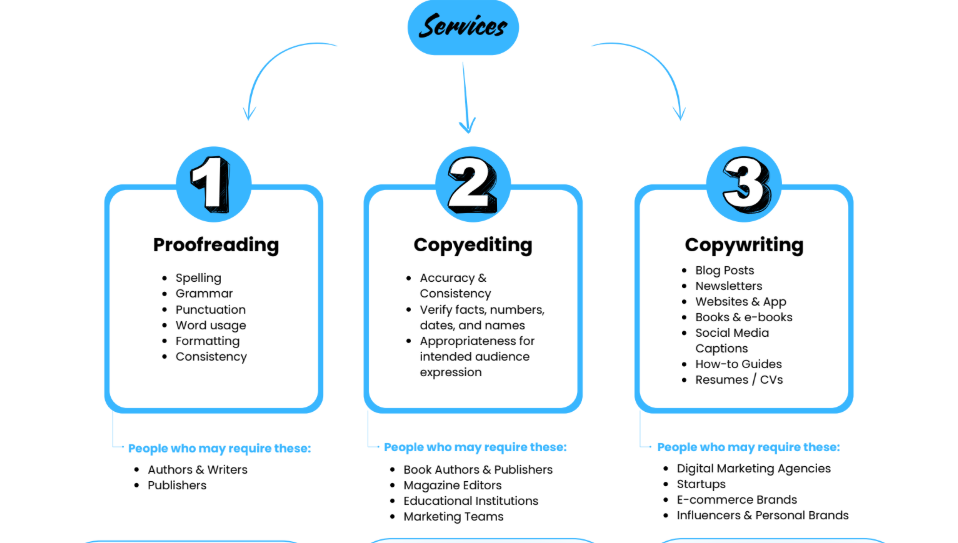
This is the gist I had created
The result?
Once her posts had the right positioning for the right audience, her calendar was filled with calls + conversions too!
She recently even told, she was getting overwhelmed with the amount of calls that were getting booked.
So, once you know where the opportunities lie, you need to stop shouting into the void and start creating content for the right audience.
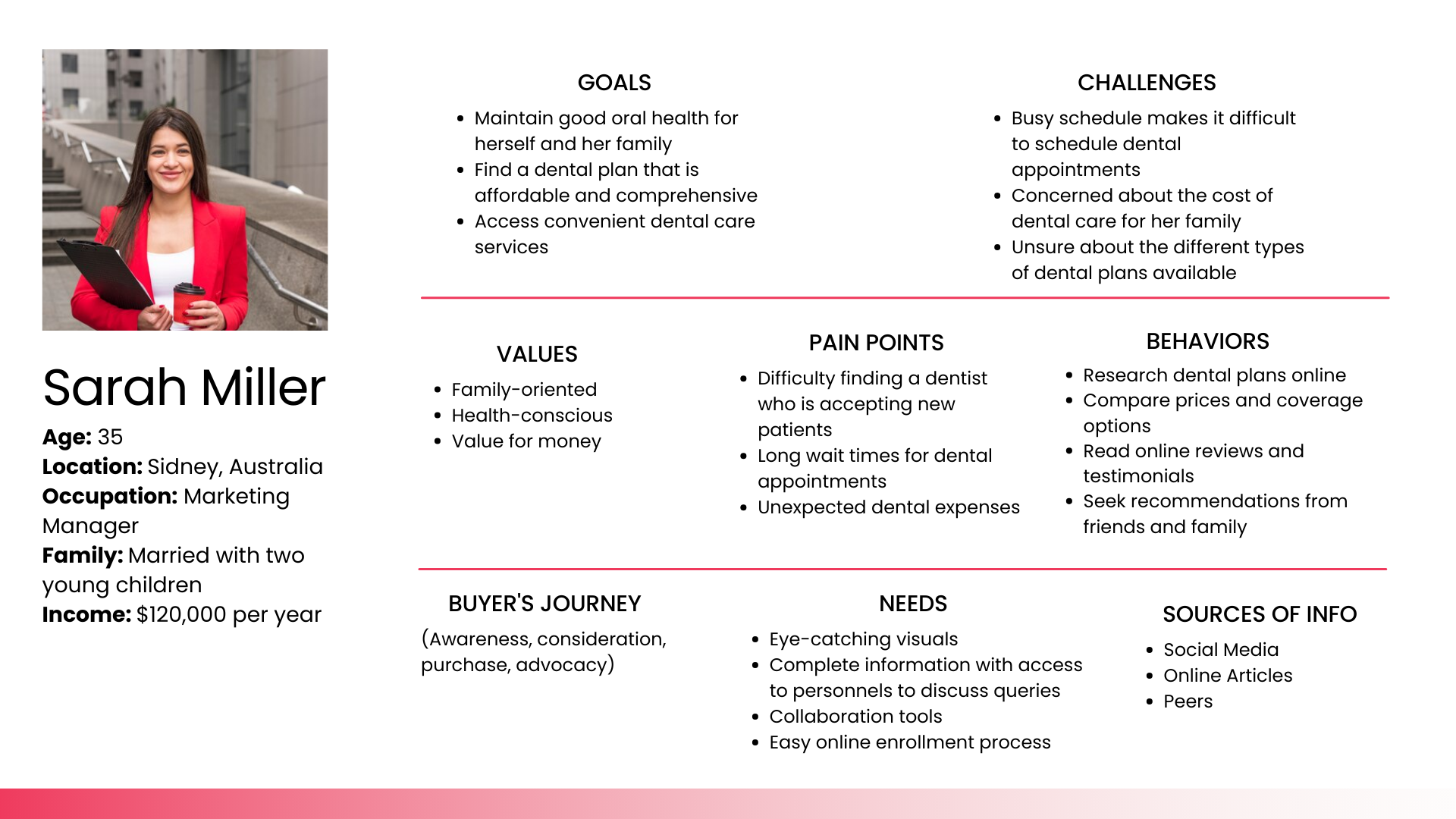
But even before that, you need to create your Ideal Customer Profile (ICP).
This is an ICP doc I had created for a dental insurance company.
In India, “audience” isn’t a monolith. A factory owner in Ludhiana consumes content differently from a MarTech founder in Bangalore.
You have to adjust your content accordingly and also keep a regular eye on who is interacting with your content.
The “Content Magnet” Strategy:
To attract the right audience, you need to match your content format to their digital “hangout” spots.
Not every channel is meant for your brand.
If someone tells you to focus on Instagram when you’re a pipe manufacturer… just run away from that person.
Where your audience spends time matters more than blindly following trends.
Here’s a simple rule of thumb:
For B2B:
Focus primarily on LinkedIn and WhatsApp. Yes, WhatsApp is a massive social channel in India.
Creating forward-worthy PDFs, industry insights, technical explainers, case studies, or infographics can work surprisingly well here.
For B2C:
Instagram Reels and YouTube Shorts are almost non-negotiable.
Short-form video content helps build awareness faster, especially when your audience makes quicker purchase decisions or relies heavily on visual trust.
The goal is simple: show up where your audience already spends time , not where the internet says you should be.
Don't just post. Use "Search-First" captions. People are now using Instagram and YouTube like Google to find services. Even I do too!
Step 3: Know Their Pain Points
This is where most small B2B companies fail.
They keep talking about their “state-of-the-art machinery”, while the customer is actually thinking:
“Will this help reduce downtime by 20%?”
Your audience doesn’t just care about features. They care about outcomes.
To truly understand them, you need to move beyond demographics (age, location, job title) and dive into psychographics: what they think, fear, want, and struggle with.
Ask questions like:
The “Late-Night” Worry
What keeps your customer awake at night? For example: “Will my GST filing get rejected?”
The “Boss” Pressure
What does your lead need to show their manager or boss to look competent or even like a hero?
The “Switching” Barrier
Why are they hesitant to leave their current vendor, even if the experience is bad?
Now the question is: How do you actually find these insights?
Go directly to the source.
Read the comments section of your top 5 competitors’ posts.
Pay close attention to questions that start with:
- “How do I…”
- “What about…”
- “Can someone explain…”
Those questions often reveal your best content pillars.
Another simple method? Just ask.
Run a short survey form or speak directly with your target audience.
Sometimes, the best content ideas come straight from the people you’re trying to serve.
Step 4: Strategize Content Funnel
You can’t ask for a sale on the very first “Hello.”
Yet, this is where many businesses go wrong, they jump straight into selling before building any trust.
You need a content funnel that mirrors the Indian buyer’s journey, which is often high-trust and high-touch.
People usually don’t buy immediately. They observe, compare, ask around, check reviews, stalk your profile a little (yes, they do 😅 ), and only then decide whether they trust you enough to move forward.
That means your content should guide them through different stages:
| Stage | Goal | Content Type |
|---|---|---|
| TOFU (Top) | Awareness | ”Educational” Reels, How-to Blogs, Industry News. |
| MOFU (Middle) | Trust | Comparison Guides, “Why we do X differently,” Newsletters. |
| BOFU (Bottom) | Conversion | Case Studies, Client Testimonials, “Book a Free Audit.” |
Note: For Indian SMEs, the Middle of the Funnel (MOFU) is often where deals die.
Why?
Because decision-making can easily stretch over 2-3 months, especially in high-ticket purchases.
If you disappear during that period, chances are your prospects will either forget you or move to someone who stayed visible.
That’s why nurturing matters.
You need to consistently provide value through educational content, follow-ups, useful resources, case studies, or relevant updates, without overwhelming them.
This funnel is the first structure you should experiment with when starting out.
Over time, you’ll likely notice that your audience doesn’t move in a straight line.
They may go back and forth between different content types before making a decision.
Someone might discover you through a short video, read your blogs later, check testimonials, stalk your profile (yes, again 😅 ), disappear for a month, and suddenly come back ready to buy.
Once you understand how users move across your different touchpoints, you can strategically place the right content to guide them toward a sale.
Just one thing: don’t annoy your audience.
No one wants multiple late-night notifications or random spammy messages on WhatsApp.
Nurture them, don’t chase them away.
Step 5: Highlight Proof & Authority
In a market like India, where “sasta aur tikau” (affordable and durable) is often the mindset, trust becomes your biggest currency.
If you don’t show proof, you practically don’t exist.
For example, when I started my solopreneur business, almost every new prospect asked the same things:
“Can you share a sample?"
"Do you have something you’ve already worked on?”
And honestly, that’s fair.
The more transparent you are about your past work, results, and workflow, the higher the chances your audience will trust you.
Here’s an authority stack you should start building:
Case Studies:
Don’t just say, “We helped a client.” Show what changed.
A simple formula I like is: Result = Action + Data
For example:
“How we reduced XYZ Corp’s electricity bill by 15% using our solar grid solution.”
Specificity builds trust.
Video Testimonials:
A raw, handheld testimonial from a happy customer speaking in Hindi or a regional language can often outperform a polished corporate video.
Yes, really.
In many cases, the more authentic and unfiltered it feels, the more believable it becomes.
So don’t overthink production quality.
Certifications & Awards:
Got certifications? Show them.
Whether it’s an ISO certification, MSME recognition, or industry award, display it proudly.
These signals matter, especially to procurement teams and decision-makers in India.
”Framework” or “Playbook” Content:
This is one of the easiest ways to establish authority.
Even if you don’t yet have testimonials or detailed case studies, people may still trust you because they find your approach, framework, or techniques valuable enough to try.
(That’s exactly why I’m sharing the L.A.K.S.H.M.I Framework here.)
Now, Here’s the Important Part: Put a Face Behind the Brand
If you plan to rely only on your company logo and expect people to trust your messaging, the chances are… low.
Especially now.
With AI-generated content everywhere, people are becoming much quicker at spotting generic, impersonal communication.
That’s why it helps to attach a real face to your brand.
In most cases, the best approach is to build both a personal brand and a company brand simultaneously.
For new companies, I usually recommend starting with the founder’s personal brand or someone who will likely stay with the company long-term.
Avoid assuming that:
- Any random employee’s face will automatically build trust
- Someone with an existing following will magically drive results
It rarely works that way.
Personal branding + authority content need to work together for the best results.
And yes, this takes time, consistency, and patience.
Step 6: Maximize Distribution (The 1:10 Rule)
If you spend 10 hours creating a piece of content, spend another 10 hours distributing it.
One of the biggest mistakes businesses make is this:
Post → disappear → expect results.
Creating content is only half the job. Distribution is what actually gets it seen.
The Repurposing Workflow:
One long-form blog can become:
- 3 LinkedIn posts (extracting key insights or tips)
- 1 short-form video (explaining the main takeaway)
- 1 WhatsApp broadcast (for warm leads or existing connections)
Your audience is likely present across multiple platforms, not just one.
And the more consistently they interact with your content, the more likely they are to remember you.
For example, someone might:
Find a particular content through a short video on YouTube Shorts, later see your post on the same topic while scrolling LinkedIn, visit your website, and eventually read your detailed long-form content on the same topic.
That’s exactly why multiple touchpoints matter today.
People rarely convert after seeing you just once.
They remember brands that keep showing up consistently and provide value across platforms.
Also, if you’re a new brand and have the budget for it, consider investing in ads.
Visibility matters.
Sometimes, repeated exposure alone helps people remember your brand name and familiarity builds trust over time.
Step 7: Increase Revenue through Optimization
Content marketing is not a “set it and forget it” project.
If you want real ROI, you need to constantly track what’s actually working and more importantly, which numbers actually matter.
I remember one incident from a previous B2B company I worked at.
A manager proudly presented LinkedIn posts’ impression numbers to leadership because, naturally, impressions looked impressive.
But after he explained what each metric actually meant, management asked the real question:
“Why is engagement low?”
Because in that case, engagement mattered far more than impressions.
And that’s the thing with content marketing, the metrics you prioritize will depend on:
- The product or service you sell
- Your business model (B2B or B2C)
- The goal you’re trying to achieve
Key Metrics I Often Track:
Inquiry Quality
Are you getting:
“Price?” : Low-intent leads
Or:
“Can we hop on a quick call?” : Higher-intent prospects
Not all leads are equal.
Click-Through Rate (CTR)
Are people actually moving from your social content to your website?
Views and likes are nice but clicks indicate interest.
Conversion Rate
How many people are actually turning into leads?
This helps you understand whether your content is simply attracting visitors or actually driving business.
The 2026 AI Twist
Also, start checking whether your brand appears in AI Overviews and generative search results.
Try asking tools like Google Gemini or ChatGPT:
“Who are the best [your industry] providers in [your city]?”
If your brand isn’t showing up, there’s a good chance your authority signals need work.
That could mean:
- Weak brand mentions
- Inconsistent positioning
- Lack of third-party validation
- Poor online authority
- Limited structured, citation-friendly content
At the end of the day, optimization is simple: double down on what works, fix what doesn’t, and stop relying on vanity metrics alone.
Get Started Today
The L.A.K.S.H.M.I Framework is designed to be lean, practical, and sustainable.
You don’t need a 50-person agency to make content marketing work.
What you really need is a system that consistently builds visibility, trust, and leads, even when you’re not actively selling.
And the best part?
You don’t have to implement everything at once.
Start with L: Locate Market Opportunities.
Begin by auditing just three competitors.
Study what they’re doing, identify the gaps, and understand what their audience is responding to.
Once you start spotting the blind spots in their strategy, you’ll realize how much opportunity exists for your brand to stand out.
And if all of this feels overwhelming or you simply want someone to help you build and execute the process, feel free to schedule a 1:1 consultation call with me.
We’ll figure out what makes the most sense for your business and where to start.
About the author

Ambika Maji
Ambika Maji is a freelance B2B content marketer with 8+ years of experience from India. Previously, she lived the corporate girlie life as a content marketer, helping B2B companies improve their content game. She specializes in SEO content, B2B content strategy, and social media content. As a writer, she specializes in data-backed blogs around content marketing, SEO, AI content, MarTech, and productivity. Off work, she enjoys reading books on Hindu Mythology and exploring Vedic astrology.